E-learning LMS
Role
Product Designer
Company
Rise Up · Lisbon
Year
2019–2022
Tools
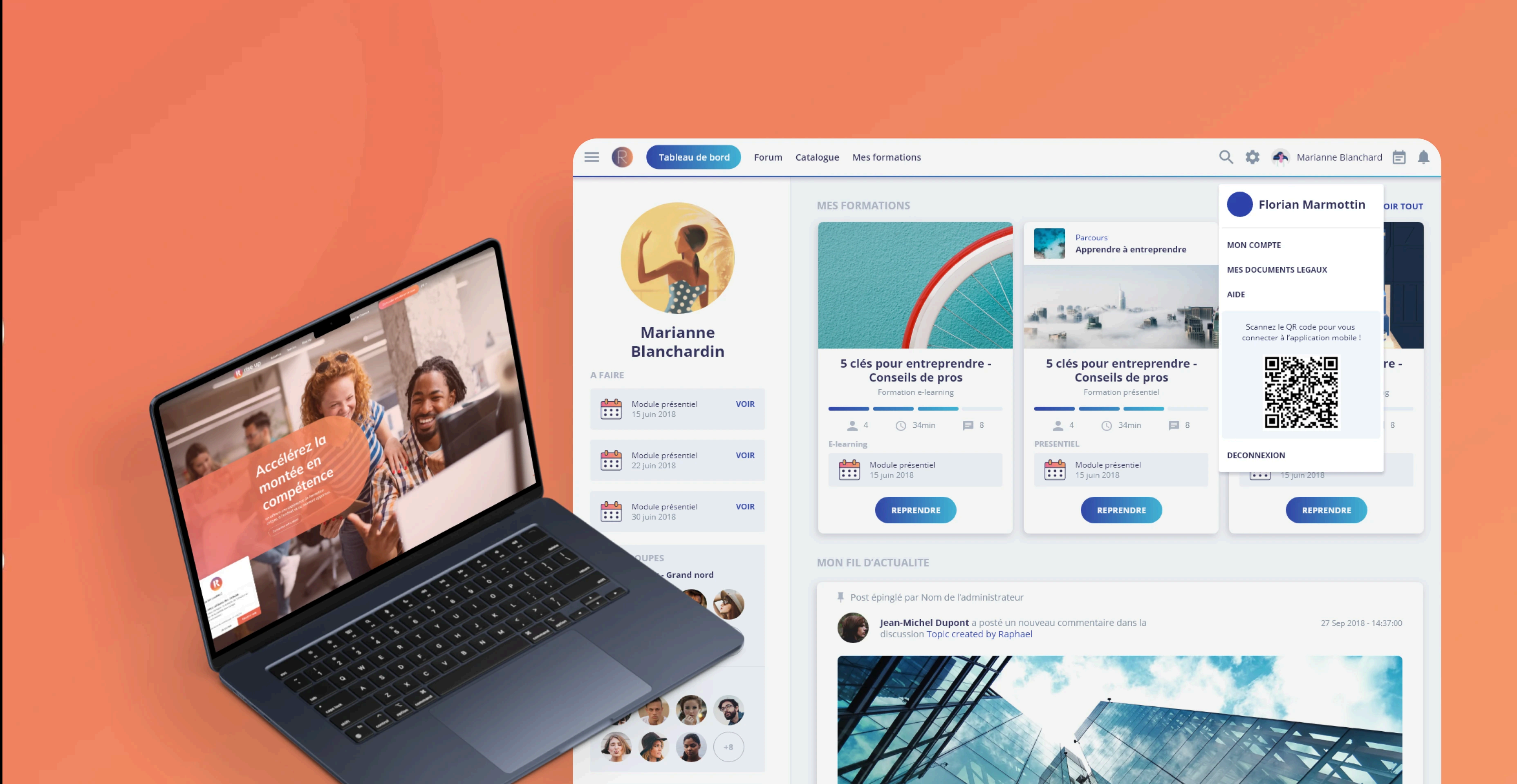
As the first UX/UI designer at RiseUp, I spearheaded the complete redesign of a B2B e-learning platform serving 3M+ active users. Facing a critical abandonment rate and poor UX scores, I designed a mobile-first experience integrating AI-powered conversational support. The transformation delivered measurable business impact: 27% increase in user engagement, 34% improvement in course completion rates, all while following the platform's technological migration plan.
01
Problem Statement
RiseUp's legacy e-learning platform was hemorrhaging users due to fundamental UX failures. Despite serving 3M+ professional learners, the platform suffered from a high abandonment rate and negative NPS scores. Key pain points identified through user research: cluttered, outdated interface causing cognitive overload (78% of users abandoned during navigation), mobile experience failure (responsive but no app) despite 70% mobile traffic, complex certificate retrieval process generating excessive support tickets, lack of personalized learning paths and progress motivation, and no intelligent assistance for common user tasks.

02
UX Strategy: Research & Discovery
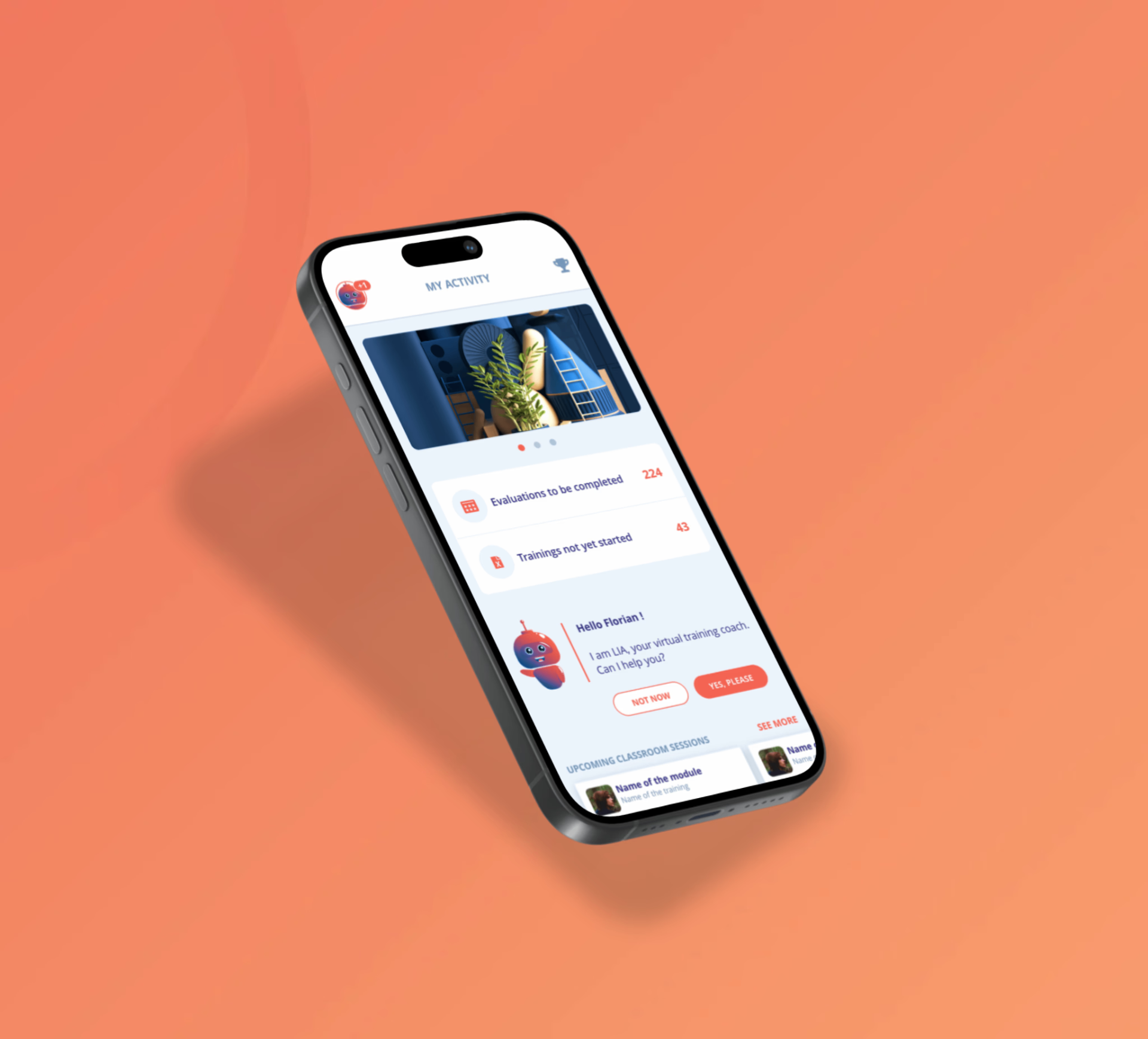
My design strategy centered on three core pillars: cognitive simplification, intelligent personalization, and subtle gamification. I co-conducted comprehensive user research including qualitative user interviews, analytics deep-dive, and stakeholder workshops with Hotjar tracking. This revealed that users spent 40% of their time searching for content rather than learning. The "My Activity" dashboard was completely reimagined from a cluttered interface into a streamlined, personalized command center. The new interface prioritized relevant information based on user context (upcoming sessions, incomplete tasks, and tailored learning paths), reducing information-seeking time by 60% and creating a clear entry point for all user journeys.
03
Gamification & LIA Chatbot Integration
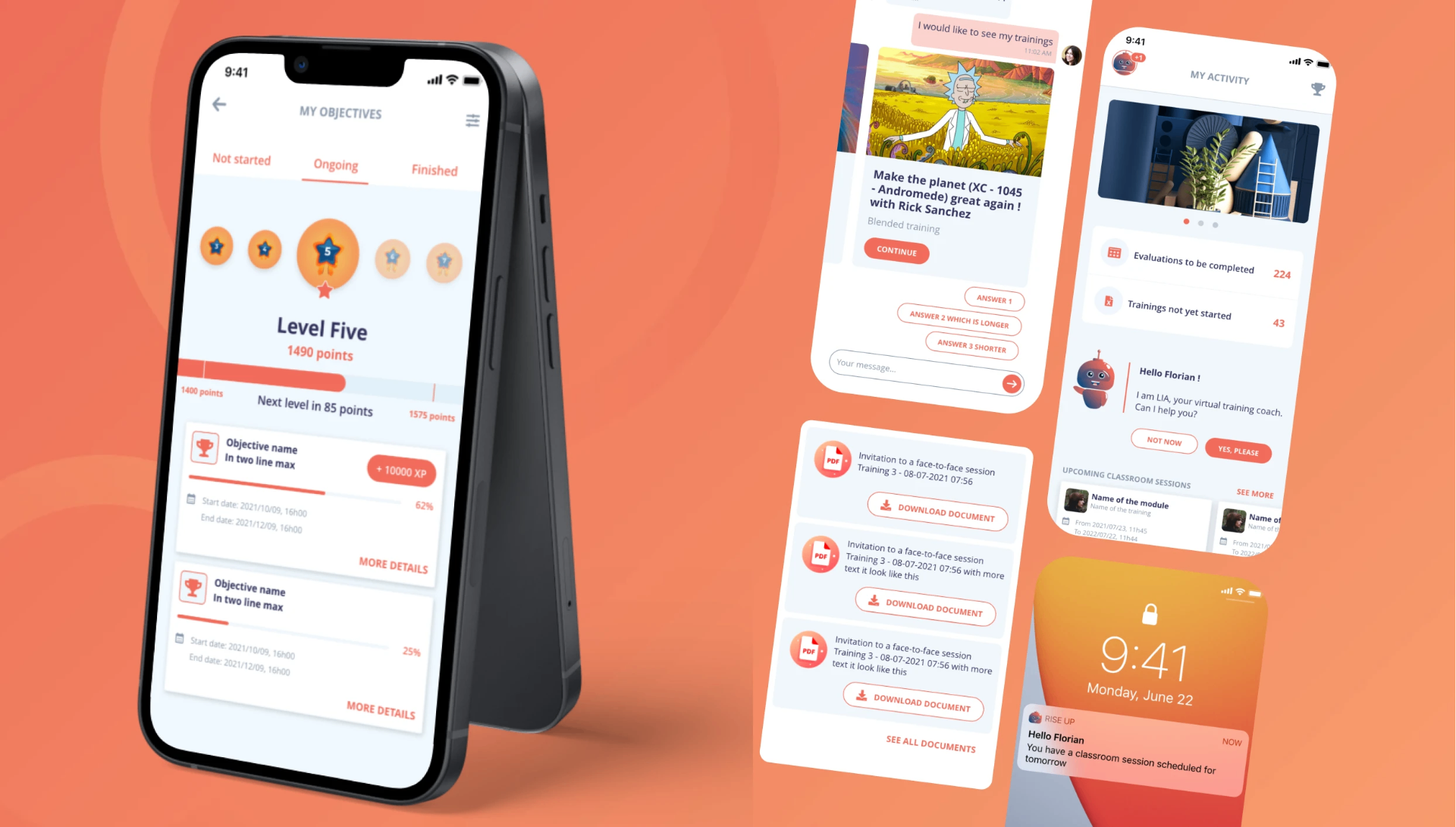
Rather than childish game elements, I designed sophisticated progress visualization that motivated professional learners. The interface featured contextual progress bars, competency-based achievements, and visual feedback systems that celebrated professional development milestones without undermining workplace learning's serious nature. The seamless integration of LIA, our AI assistant, solved critical user pain points through contextual, proactive support. LIA handled certificate retrieval (previously our biggest mobile friction point), sent intelligent session reminders, and provided instant assistance without overwhelming the interface. This reduced support tickets by 30% while improving user autonomy.
04
UI Design & Design System
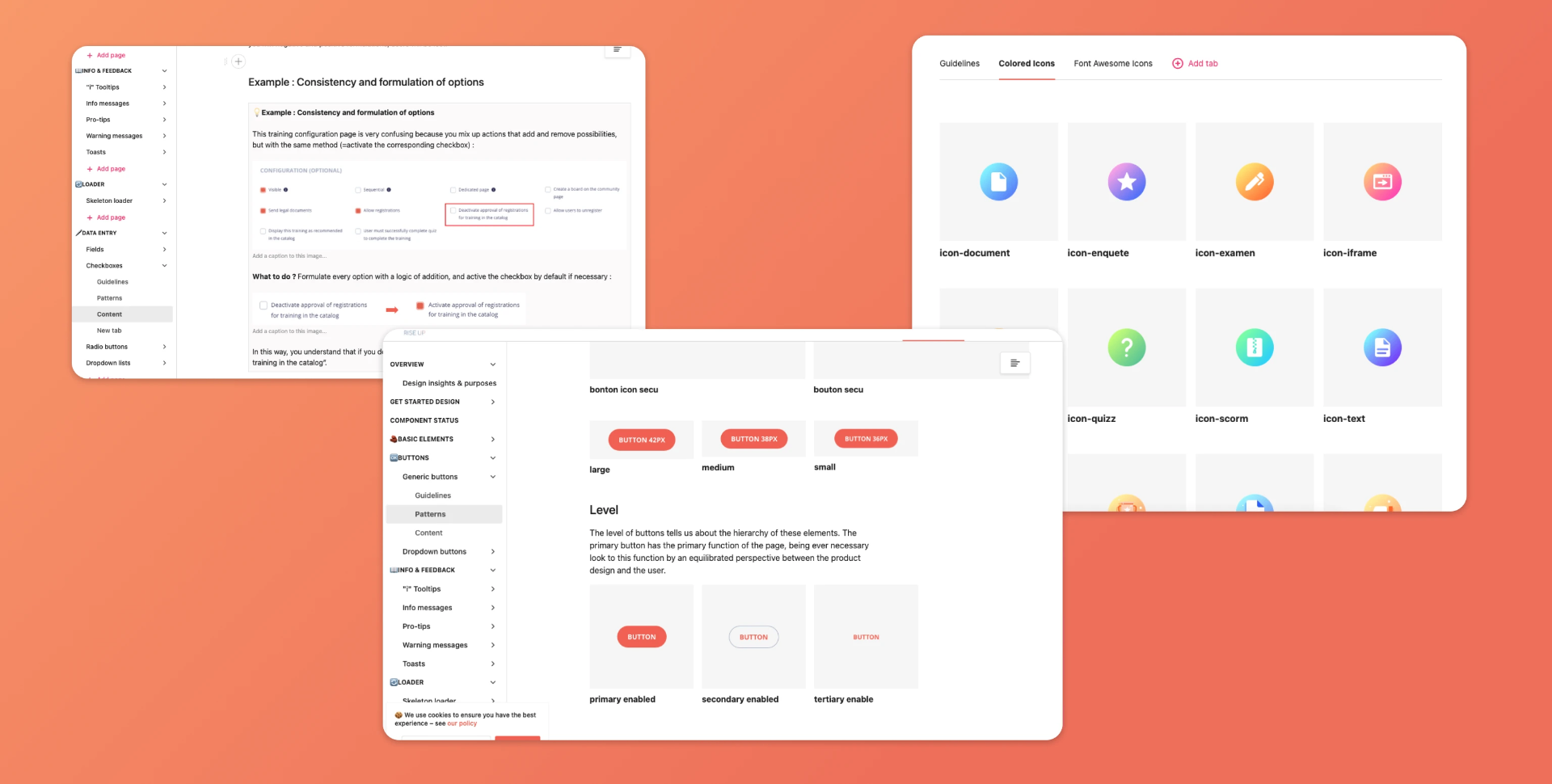
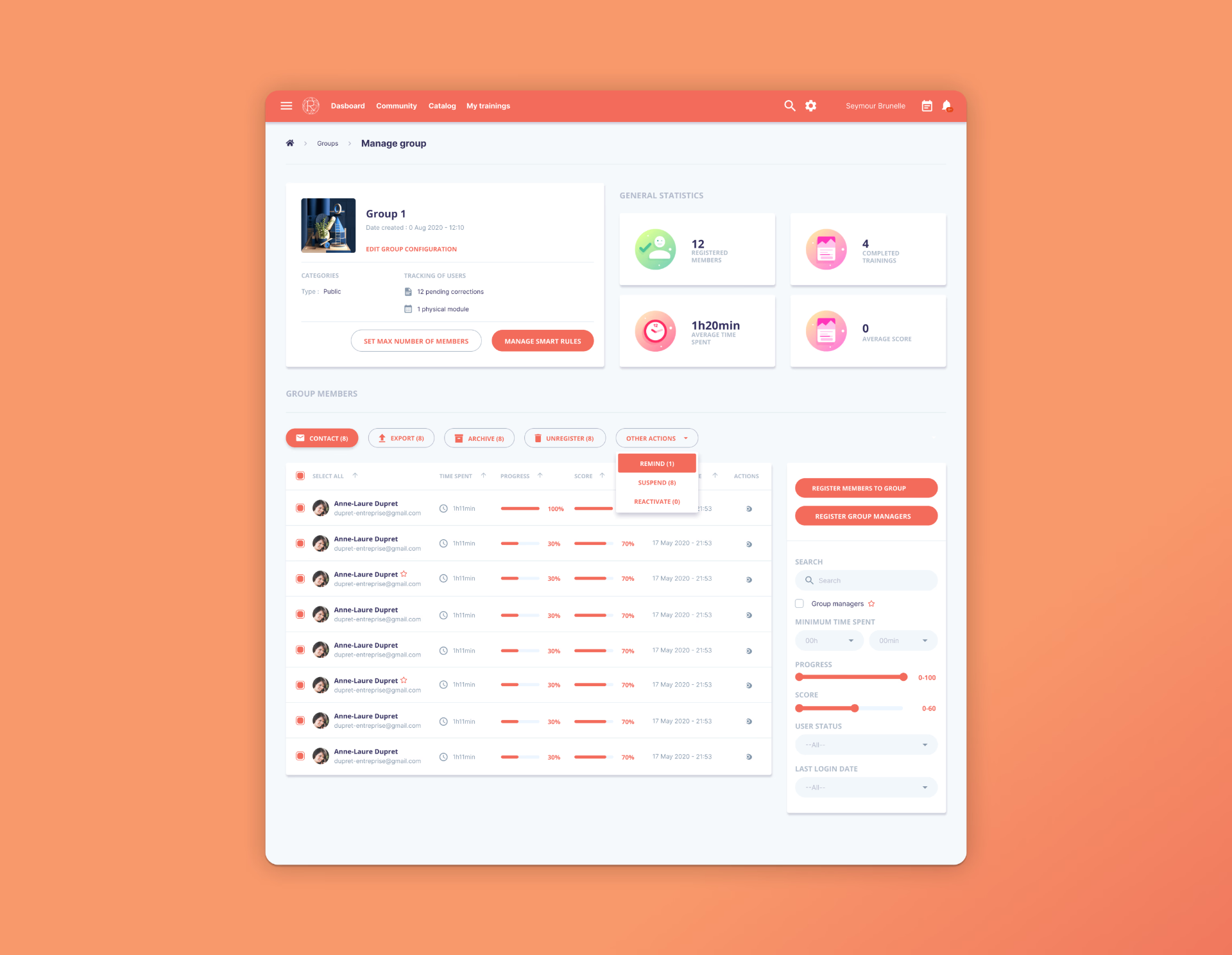
The visual design underwent a significant transformation. The old, busy layout was replaced with a clean, modern aesthetic focused on clarity, presenting only the most relevant data in a well-organized manner. Visual hierarchy ensured that session deadlines and training paths were immediately visible. I created a comprehensive design system with 150+ reusable components on Zeroheight, ensuring consistency across all touchpoints. The mobile-first approach optimized thumb-friendly interactions, reduced load times by 40%, and maintained visual hierarchy across all screen sizes. Every component met WCAG 2.1 AA accessibility standards. Some challenges included balancing a simplified interface with the need to display all relevant information, and ensuring the mobile-first design still met desktop users' expectations.
05
Results & Strategic Insights
After implementation, user activity increased by 27% with a 34% rise in session completion rates. LIA saw strong interaction, particularly for reminders and certificate access. Push notifications reduced missed sessions. The gamified objectives boosted retention as learners found tracking progress more engaging. I solved integration challenges through progressive disclosure and smart triggering based on user behavior patterns. Strategic insights gained: B2B gamification requires professional sophistication, subtle progress indicators outperform obvious game mechanics. AI integration succeeds when it feels like intelligent assistance, not automated responses. Mobile-first in B2B demands different interaction patterns than consumer apps. Data-driven personalization must be transparent and user-controllable. This project validated the strategic value of user-centered design in B2B software.
+27% user engagement
+34% training completion rate
-30% support tickets thanks to LIA chatbot
-60% content search time
-40% load times with mobile-first optimization
Design system of 150+ components (Figma + Zeroheight)
WCAG 2.1 AA accessibility compliance across all components