QVT E-learning
Role
Founding Designer & Product Lead
Company
Monmartin · Paris
Year
2016–2019
Tools
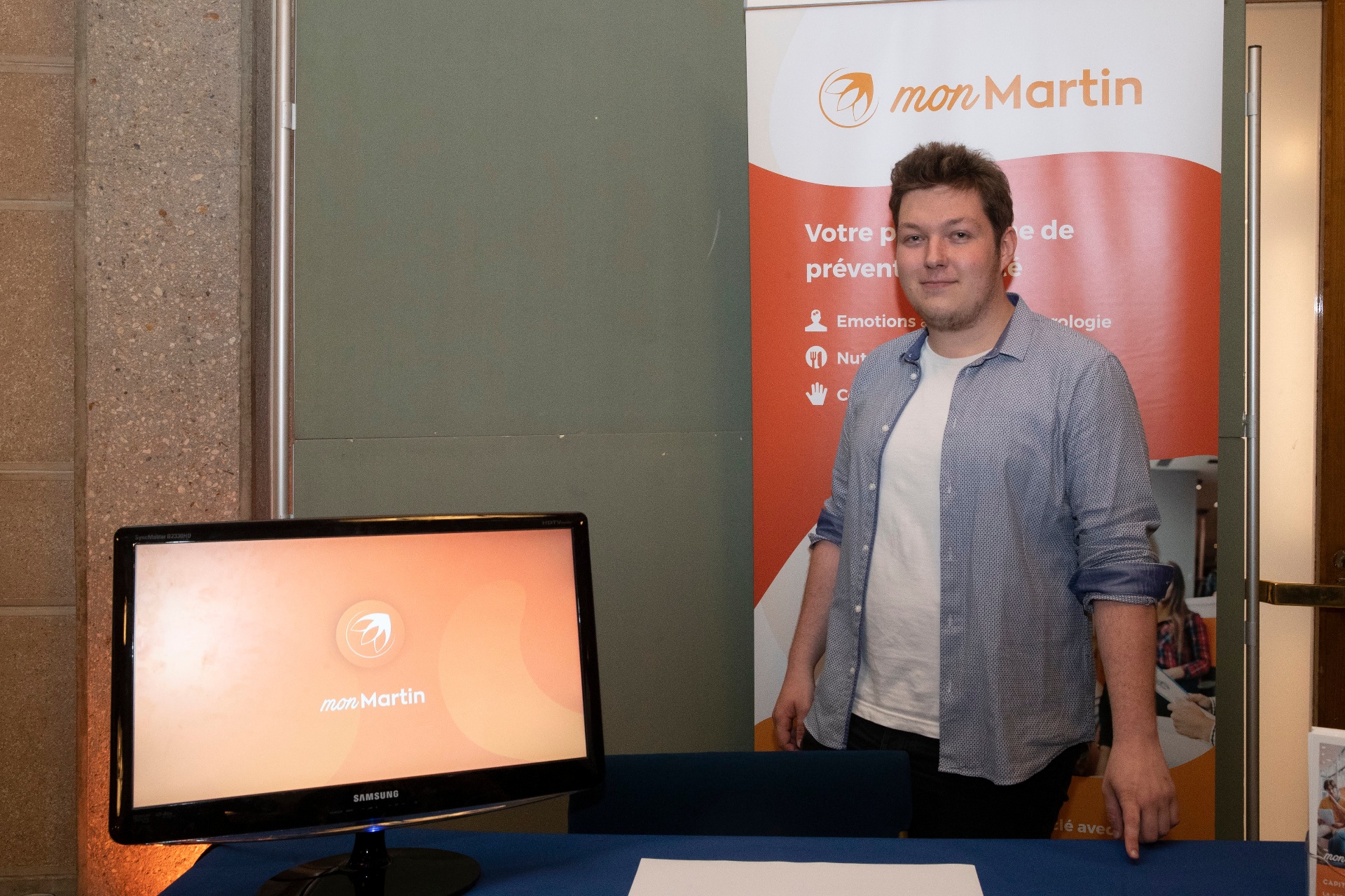
Monmartin is a preventive health training company built around a simple premise: bring health experts directly into the workplace, on company time, for the people who need it most. As founding designer, I built everything from scratch, brand identity, product strategy, three successive app versions, motion design, and video production, and grew a small design team that continued operating after I left. At its peak, the platform connected 50+ experts across Paris, Lyon, and Marseille, serving major accounts including Crédit Agricole IDF, Carrefour IDF, BCA Enchères Auto, and Pernod Ricard, and laid the foundation for the post-COVID pivot to 360Learning. Réseau Entreprendre Yvelines 2018 laureate.
01
The Problem
Employees in physically demanding roles, cashiers, warehouse workers, office workers, were accumulating work-related injuries, stress, and poor nutritional habits with no structured support from their employers. The opportunities were there: companies wanted to invest in employee wellness. But translating that intent into actual participation was broken.
Scheduling conflicts, no reminders, complex booking systems, and zero personalization meant health initiatives launched and quietly died. The people who needed them most weren't attending.
The goal: remove every point of friction between an employee and a booked health session.
02
The Expert Network
Three core disciplines, each with a different delivery format designed around the specific needs of the audience.
Osteopathy: on-site workshops focused on workstation posture, MSD prevention, and physical recovery for employees in physically demanding roles.
Sophrology: group and individual sessions on stress management, relaxation techniques, and mental recovery.
Nutrition: practical cooking workshops and educational sessions on eating to perform, focused on sustainable habits rather than generic advice.
At its peak, 50+ certified experts operated across three cities. Client HR teams could browse expert profiles, read specializations, and book sessions directly, with HR Director video testimonials available for internal communication.
03
Persona mapping workshop
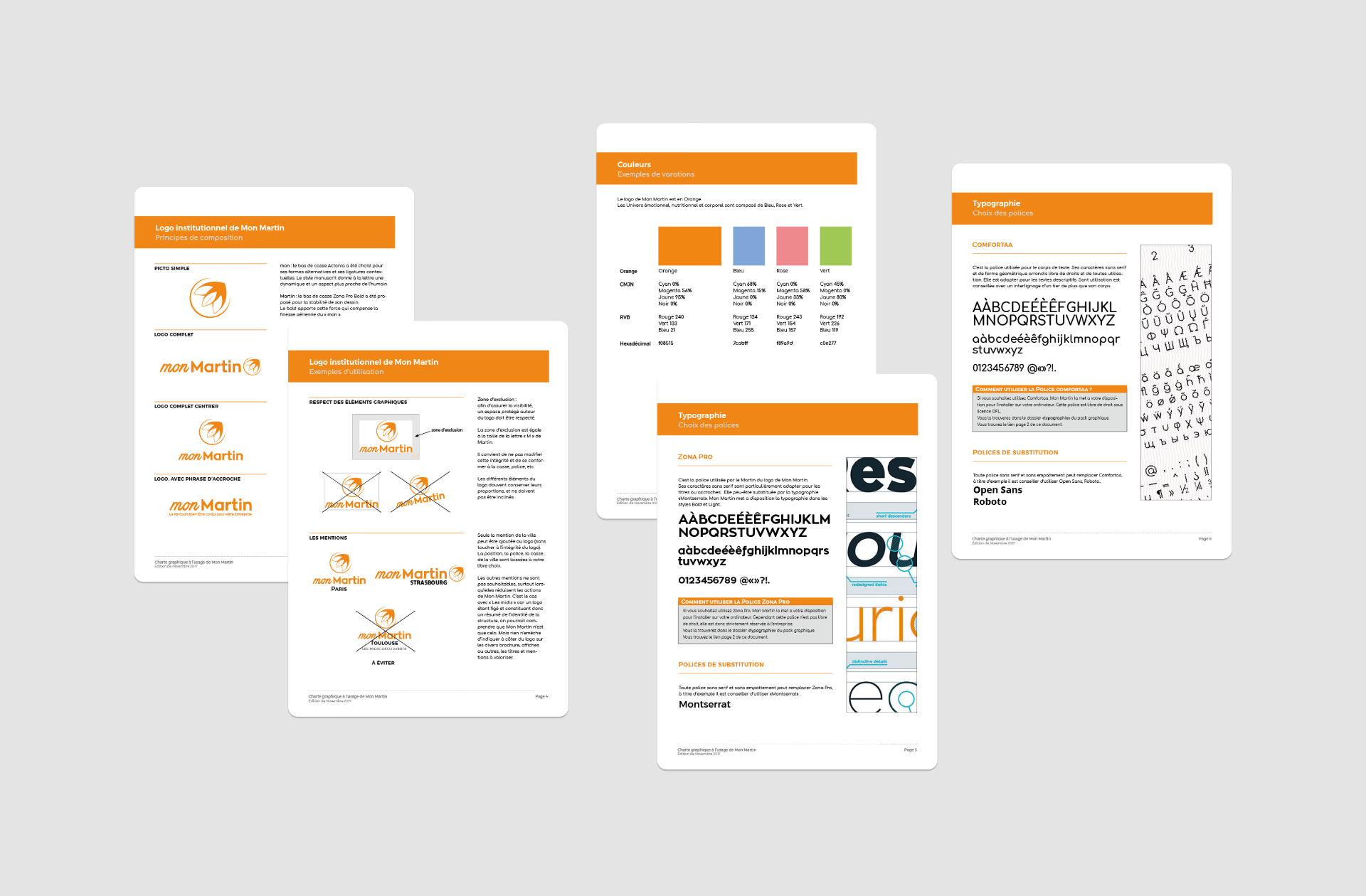
Internal workshop mapping the full ecosystem of user roles, admin, learner, designer, community manager, facilitator, against verticals (technicians, sellers, apprentices, hospital staff, farmers, students). Each post-it became a persona to validate or eliminate, feeding the journey maps and the prioritization of which audiences the product would actually serve.
Running this as a workshop rather than a solo exercise was deliberate: it forced product, business, and design to share the same map and commit to the same cuts. The output was less a document than a shared decision.
04
Building the Product · Three Versions
V1 · The Salon Demo. Two weeks before the Salon des Entrepreneurs in Paris, I built the first version solo: a frontend quiz using JSON to deliver a personalized orientation toward one of the three disciplines. Fast, focused, and built to demonstrate the concept live at the event. It worked, it became our main conversion tool on the day.
V2 · The Full Platform. V2 shipped as a complete platform: video content library, session follow-up tracking, formation records compatible with CPF (French professional training credits), and a presence management system for workshops. It covered the full employee journey from onboarding to post-session review. The product was solid, the business model needed more runway than the round provided. The decision to integrate into 360Learning rather than rebuild a V3 from scratch was a deliberate call, it's what enabled the post-COVID pivot that kept the company alive.
V3 · 360Learning Integration. Rather than rebuild again, we integrated our content and methodology into the 360Learning platform, shifting Monmartin from a phygital model to a fully digital offering. This laid the foundation for the post-COVID pivot that scaled the company after I left.
05
UX & Research
Every version started with direct contact with employees, interviews and surveys across different roles and industries. The research consistently showed the same thing: people weren't resistant to health programs. They were resistant to the friction of accessing them.
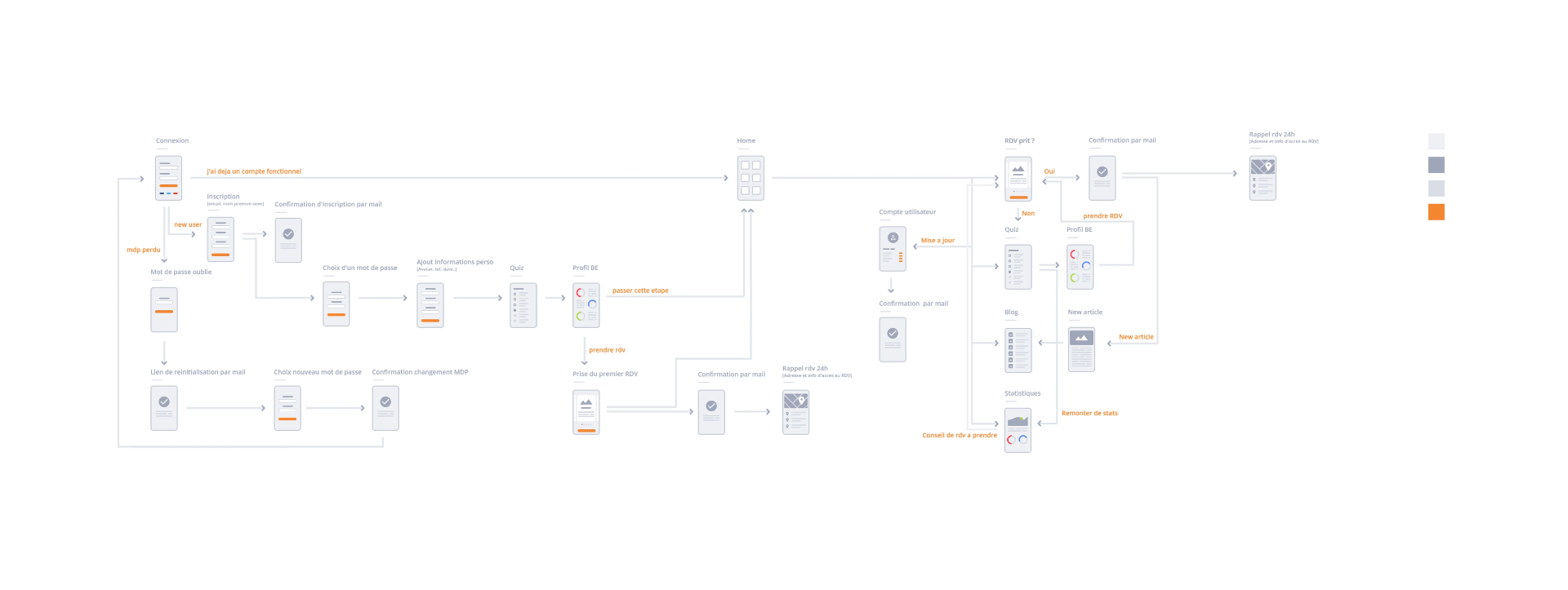
From those insights I built personas and journey maps covering the full flow: awareness, booking, confirmation, 24h reminder, attendance, follow-up. Each step that required effort from the user was a drop-off point. Each step we automated or simplified became a reason to come back.
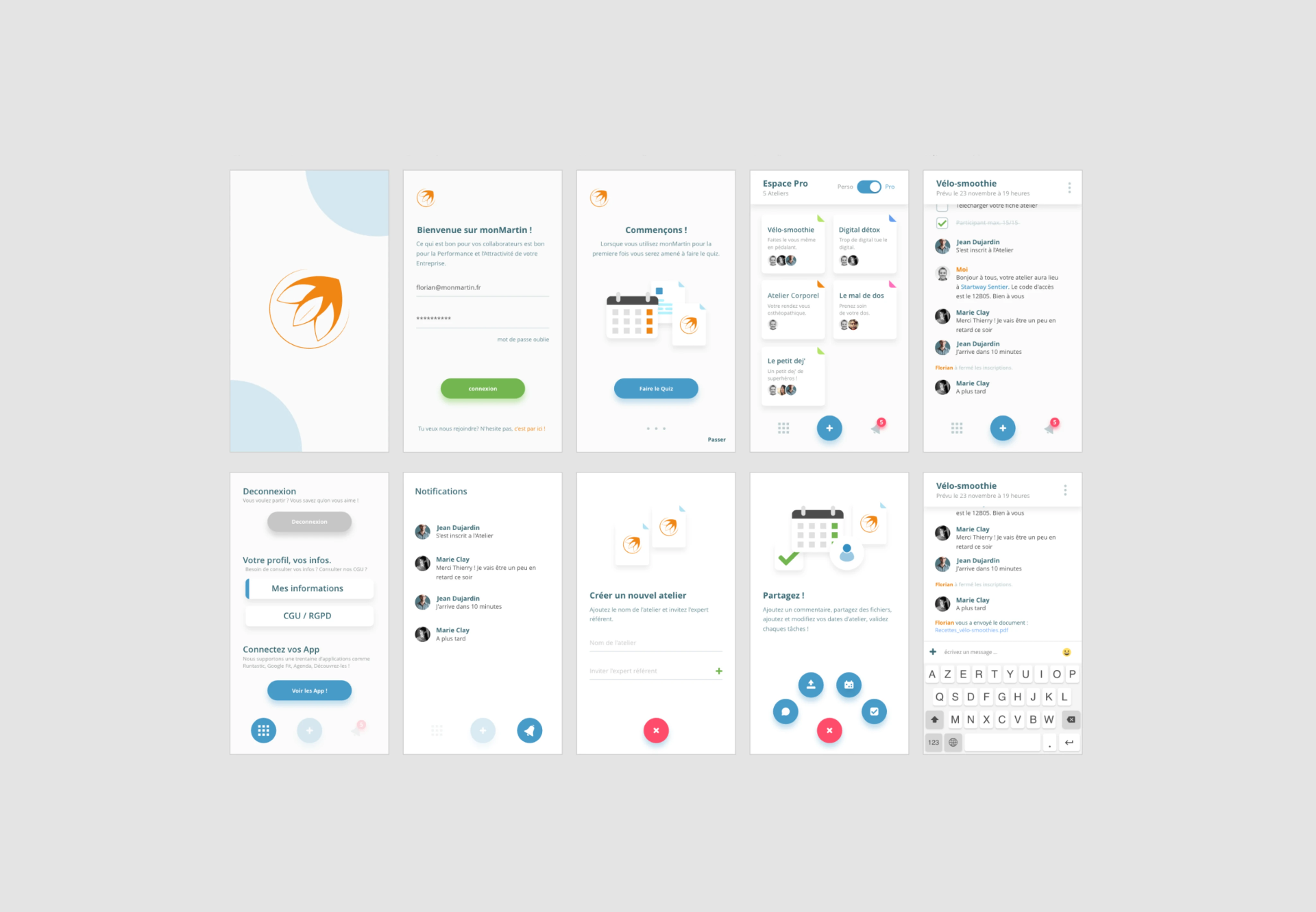
Key design decisions that moved the numbers: · Calendar sync on booking to eliminate conflicts before they happened · Automated confirmation emails and 24-hour reminders · Onboarding quiz to personalize recommendations from session one · Real-time chat between participants and experts for pre and post-session support · Separate professional dashboard for experts to manage availability and attendance
06
Brand Identity, Team & Pivot
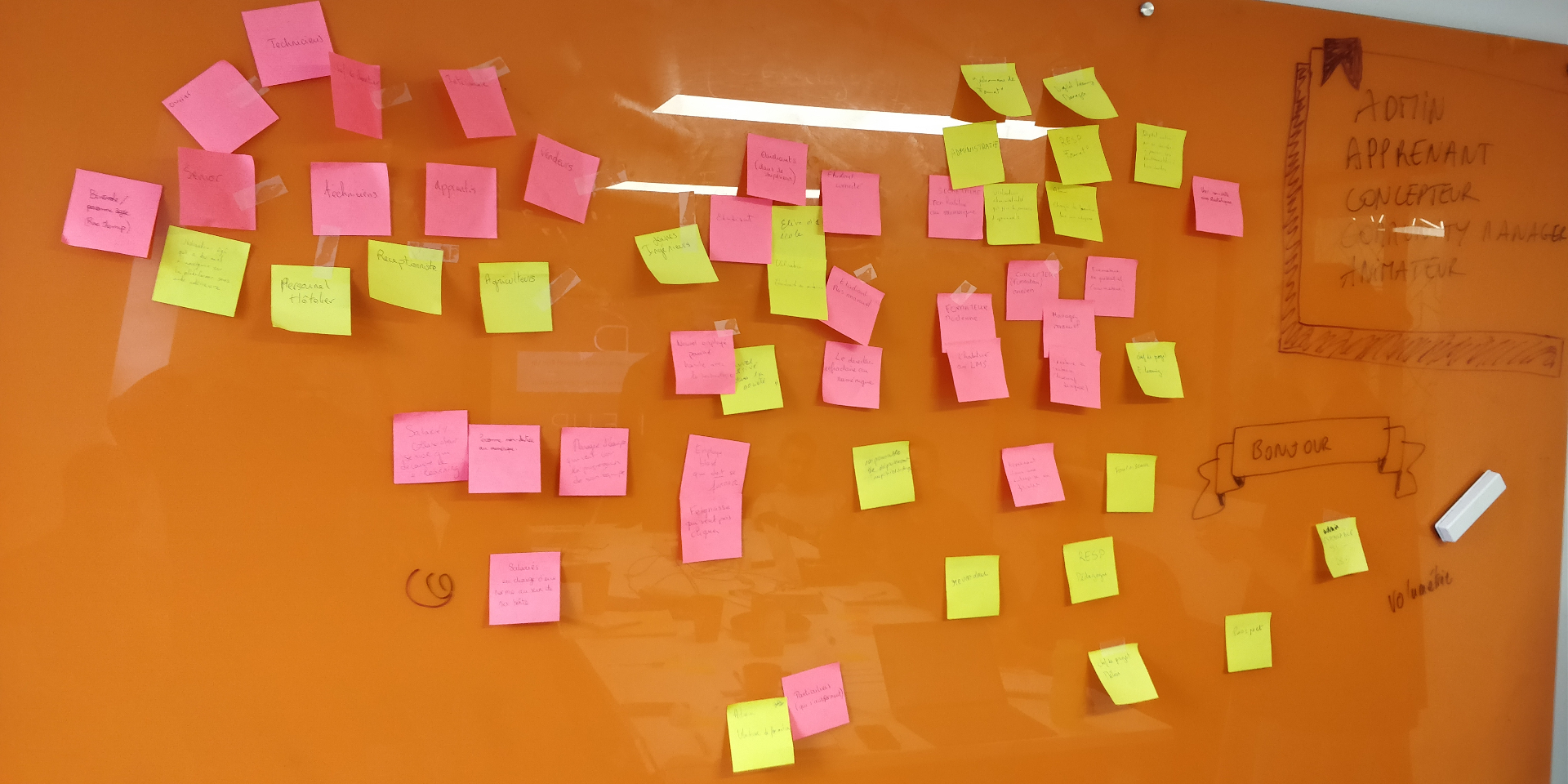
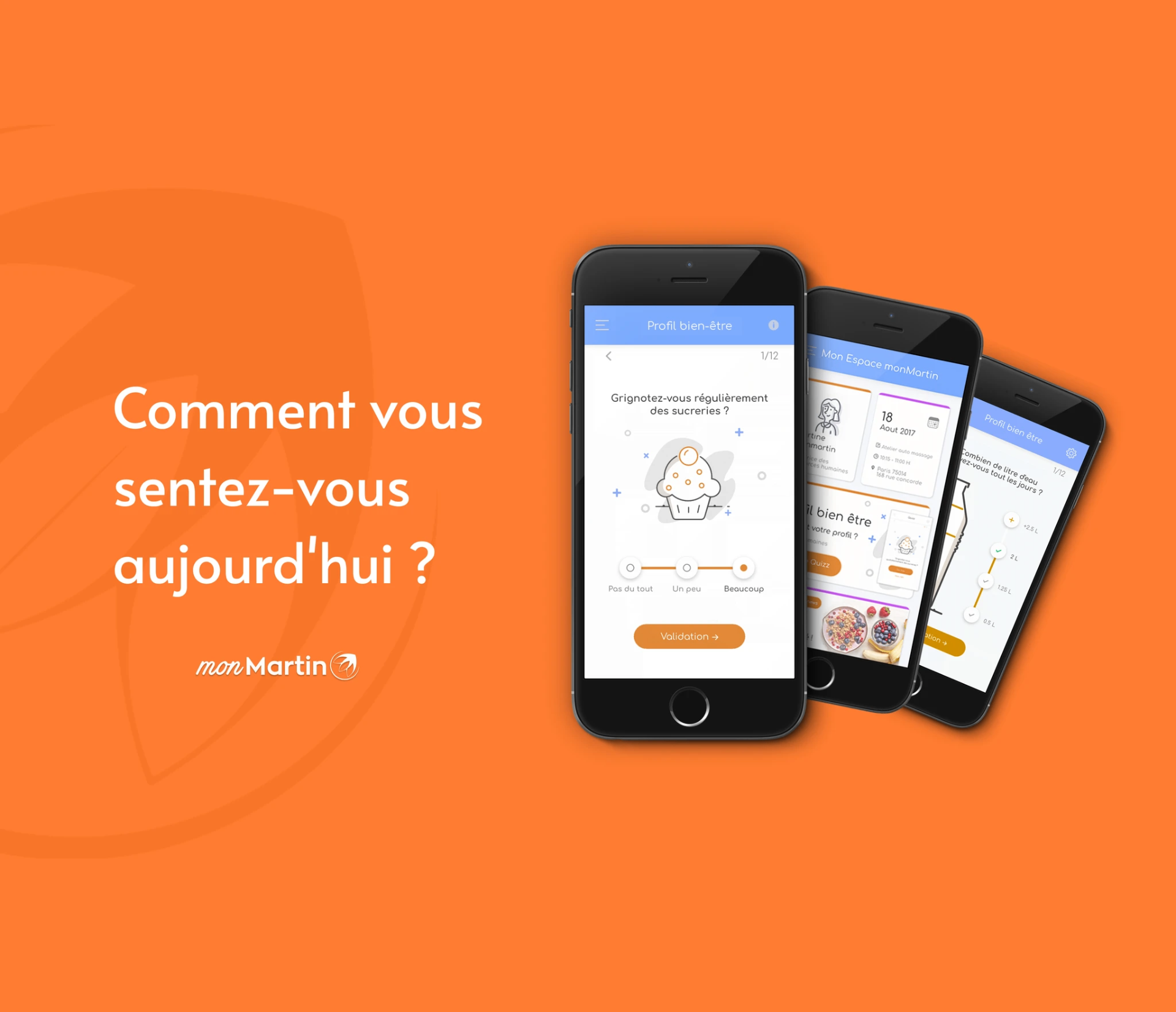
Built the full visual identity from zero, logo, color system, typography, UI components, marketing materials, motion design assets, and video production including HR Director testimonial videos for client-facing communication.
The design direction deliberately avoided the clinical aesthetic common in health products. The goal was to feel like a modern, trustworthy company, credible to HR directors at large accounts while remaining approachable to the employees on the floor.
Over the project I directed one motion design apprentice for a full year and supervised two strategy and design interns. As I shifted more toward communication, video production, and motion design in the later phase, I progressively handed off product design responsibilities, leaving a foundation solid enough for the team to industrialize motion production and execute the 360Learning partnership after my departure.
The AI-driven personalized content roadmap I had mapped out before leaving was later developed at my next company, Riseup.
07
Building & Leading the Design Team
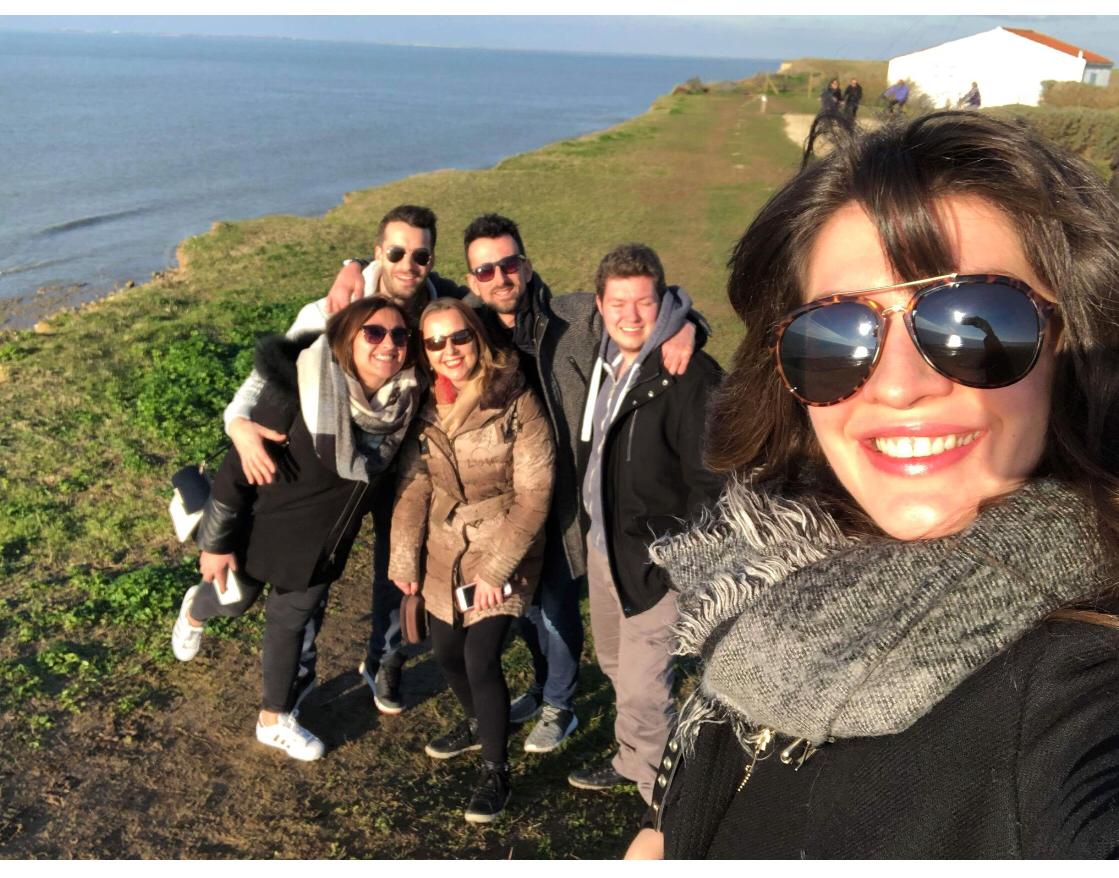
Recruiting and growing a design team was part of the founding role, not a side responsibility. I sourced, interviewed, and hired one motion design apprentice for a full year, plus two interns covering design and strategy. The decision to bring in juniors rather than seniors was deliberate: at our scale, raw senior talent wasn't sustainable, but a junior team trained on our methods became a compounding asset.
Operating rhythm. I installed daily standups, weekly 1:1s, and written briefs for every deliverable. The brief format was non-negotiable, context, intent, constraints, success criteria, because it forced me to clarify my own thinking before delegating, and it gave each junior a document they could return to without interrupting me. Time saved on both sides.
Process design for a small team. I built lightweight templates for recurring outputs (motion sequences, social assets, internal video) so the team could execute autonomously on 70% of requests. The remaining 30%, the strategic or visually ambitious work, became the space where I worked alongside them rather than reviewing from a distance. Pedagogy through co-production, not correction.
Domains covered. Pure UI and brand design on one side, motion design and video production on the other. Each team member had a primary track and a secondary exposure, so the team could cover for each other and so juniors built a range, not a silo.
The handoff test. When I shifted my focus toward communication and motion production in the later phase, the design team continued operating on the rhythms I had installed. By the time I left the company, motion production had been industrialized internally, and the team executed the 360Learning content migration without me. That, more than any single deliverable, is how I measure the leadership work.
08
Réseau Entreprendre Yvelines · 2018 Award
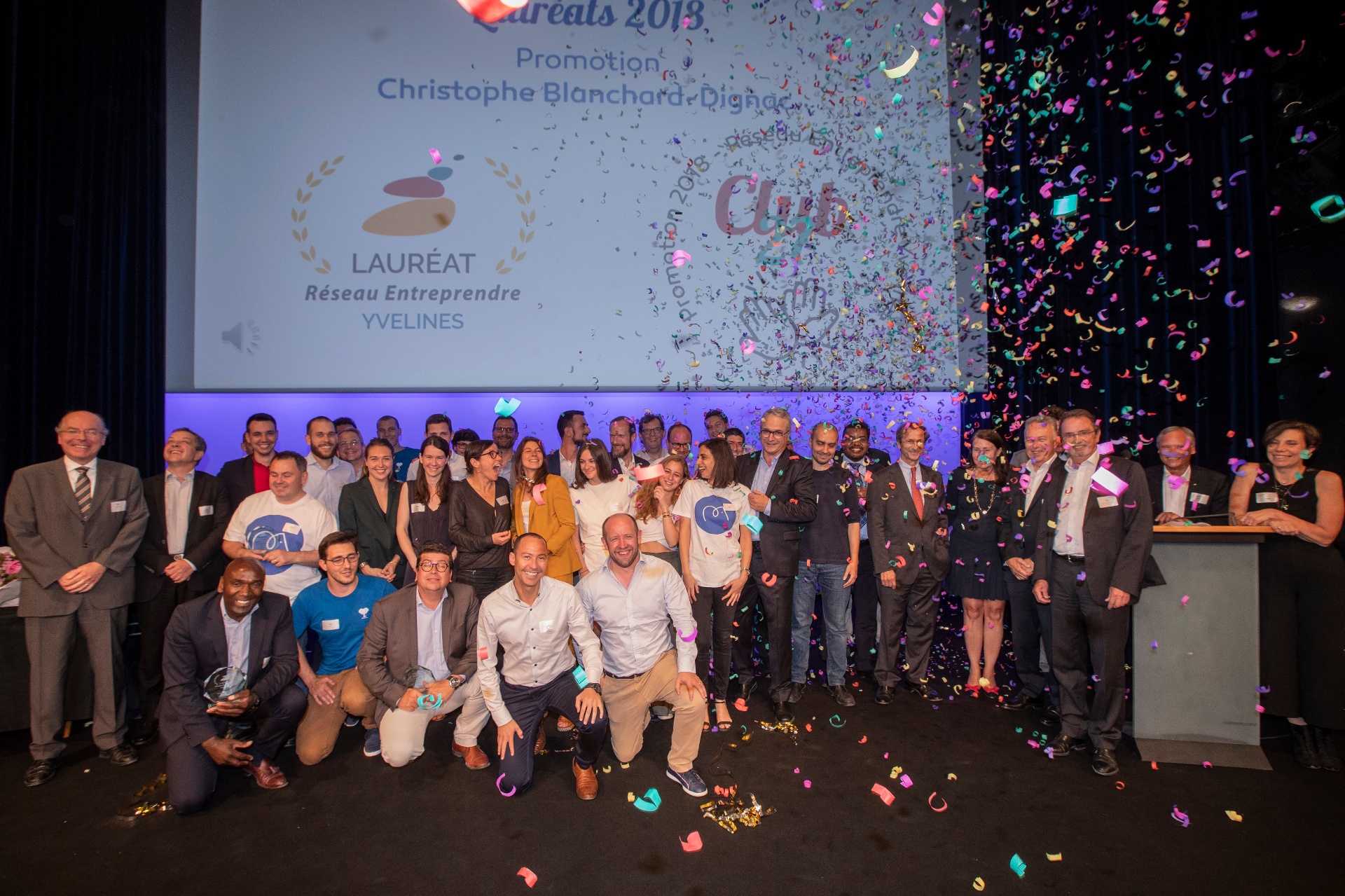
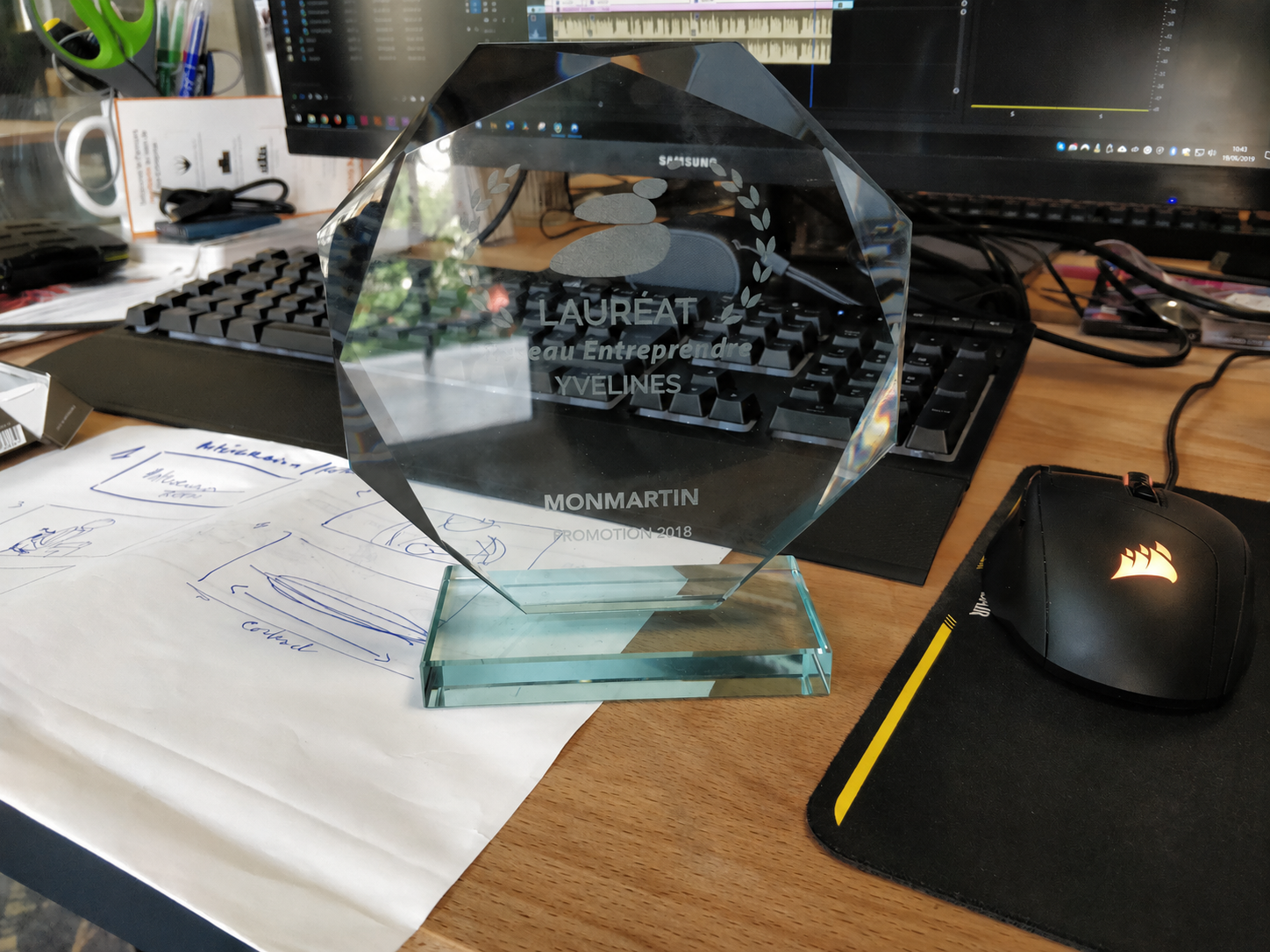
Monmartin was selected as a 2018 laureate of Réseau Entreprendre Yvelines, Promotion Christophe Blanchard-Dignac. The recognition validated both the product vision and the operational discipline behind it, and gave us access to a network of entrepreneurs who supported the company through its scaling phase.
83% regular workshop participation among enrolled employees
−62% missed appointments (app analytics and post-workshop satisfaction surveys)
Réseau Entreprendre Yvelines 2018 laureate
50+ experts across Paris, Lyon, Marseille at peak
Major clients: Crédit Agricole IDF, Carrefour IDF, BCA Enchères Auto, Pernod Ricard
Product foundation supported post-COVID pivot to fully digital via 360Learning partnership
HR Director video testimonials produced and used as client acquisition content