Improving E-Learning UI Through Better Visual Communication
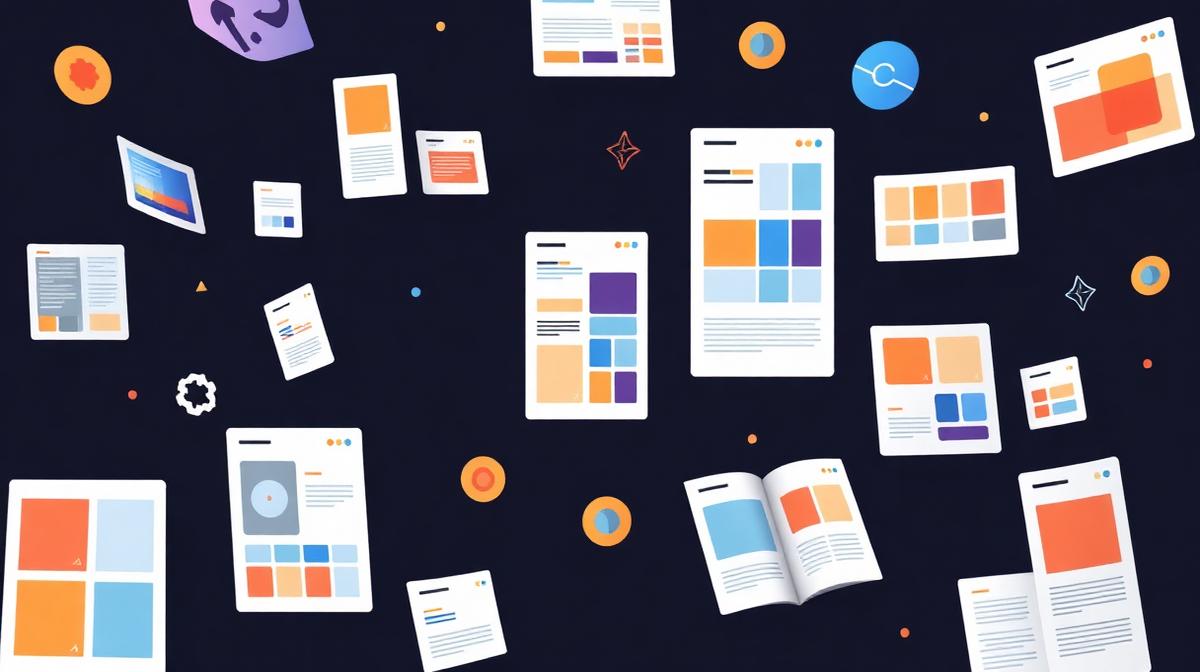
More than 90% of the information our brain processes is visual. When designing e-learning interfaces, leveraging this fact through better visual communication directly improves learning retention and comprehension.
Layout Is Everything
Your layout determines how easily users can scan, absorb, and navigate content. Key principles:
- Use page sections and columns to break content into digestible blocks
- Add spacers and separators to prevent information from feeling overwhelming
- Use images as visual breakers between text-heavy sections
- Create clear visual flow so users know where to look next
For story-driven content, consider swipeable pages that feel like reading a book. For reference material, use scannable layouts with clear headings and anchor points.
Consistent Layout Elements
Repetition builds familiarity. When learners recognize a visual pattern, bold text for key concepts, colored boxes for exercises, icons for tips, they process information faster.
Benefits of consistent elements:
- Reduced cognitive load for learners
- Faster content production for creators
- Recognizable brand identity across courses
- Easier navigation within and between modules
Simple, Intuitive Navigation
Navigation should feel as natural as flipping through a book, but more interactive. Key considerations:
- Make the user's journey through content logical and predictable
- Use clear calls to action to guide learners forward
- Personalize button labels ("Continue your lesson" vs. generic "Next")
- Place strategic links to supporting content without overwhelming the main flow
- Consider the reading flow on every device
Visual Indicators
Consistent visual cues help learners scan content quickly and identify what matters:
- Color coding to differentiate content types (theory, exercises, examples)
- Icons to mark important concepts, warnings, or tips
- Progress markers to show advancement through material
- Highlighted keywords to aid scanning
The key is consistency: once you establish a visual language, stick to it throughout the entire learning experience.
These are simple but powerful techniques. Better visual communication doesn't require a complete redesign, sometimes small, consistent improvements make the biggest difference in how effectively learners engage with your content.